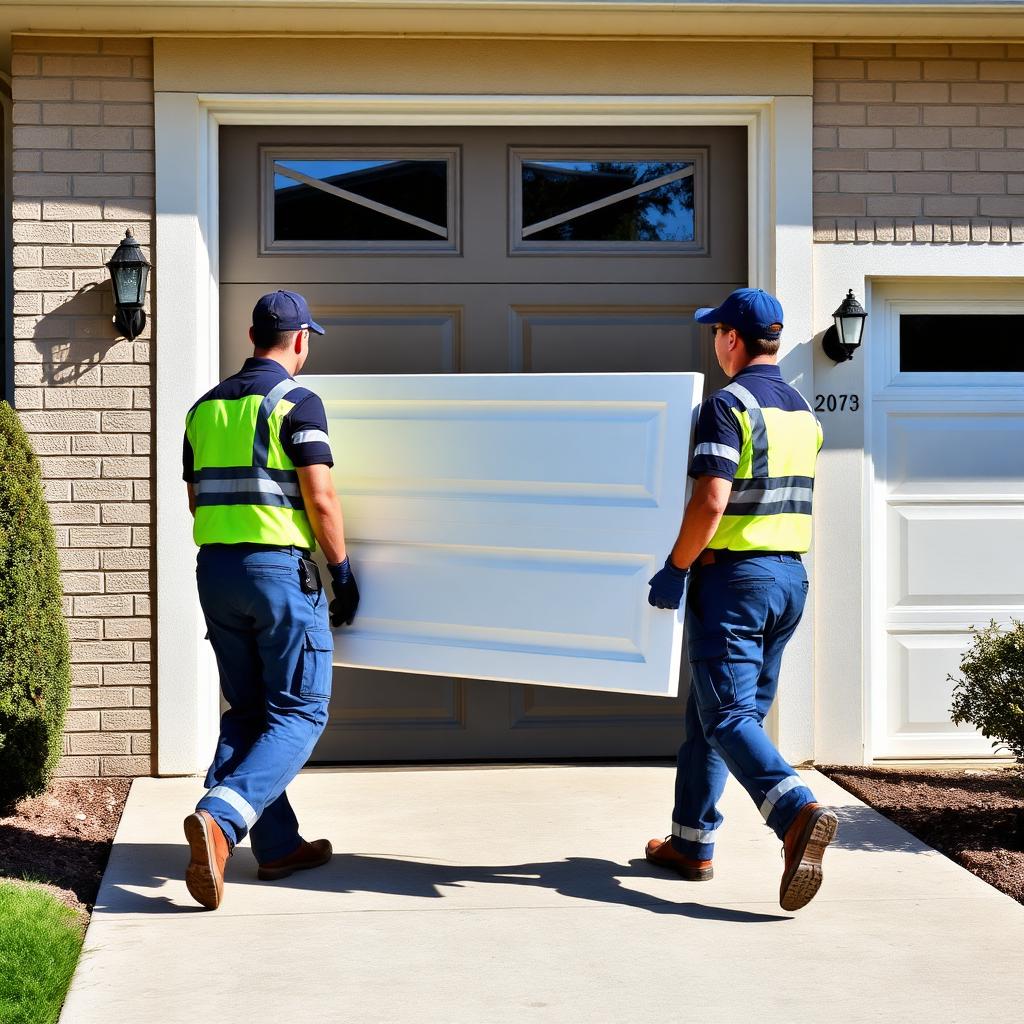
Garage doors rarely fail without warning. Here are the eight signs homeowners tend to ignore — and the ones that mean you should stop using the door until a technician takes a look.
Your garage door is trying to tell you something
Most garage doors cycle up and down two to five times a day — around 1,500 cycles a year in a typical household. That's enough repetition that small problems announce themselves early, if you know what to listen and look for. Ignoring them almost always means paying more later: a $200 spring repair becomes a $600 opener rebuild, and a $150 roller replacement becomes an off-track emergency call. The good news is that the eight signs below are easy to spot before the door strands your car in the garage or leaves your home unsecured overnight.
1. Loud grinding, popping, or metallic scraping
A healthy garage door is not silent, but it should sound like a smooth mechanical hum, not a construction site. Grinding usually points to worn rollers or a dry track. Popping and banging often mean a torsion spring is close to failure or a hinge is loose. Metallic scraping is the sound of a bent track section rubbing on itself. None of these fix themselves, and all of them get worse fast. If you're hearing them, book a garage door repair appointment this week — not next month.
2. The door moves slower — or in jerky sections
Modern openers move at a consistent, predictable speed. When the door starts hesitating, pausing halfway, or dropping in the last foot, the cause is almost always mechanical: an unbalanced door (one spring is weaker than the other), sticky rollers, or an opener that's compensating for extra friction. Left alone, that same friction burns out the opener's motor. A quick balance test — pulling the release cord and lifting the door manually — will tell you if the door is heavy on its own, which points squarely at spring or cable trouble.
3. The door won't fully close and reverses on its own
If the door starts to close, hits about six inches from the ground, and heads back up, you're looking at safety sensors that are out of alignment or dirty. It's one of the simplest garage door repairs there is — often a five-minute fix — but it also means the door will not close at all until it's addressed. The sensors are the small photo-eye units near the bottom of each vertical track. If one is knocked crooked or a spider web is blocking the beam, the opener refuses to close on purpose. That's a feature, not a bug.
4. Visible rust, dents, or sagging panels
Steel doors rust from the bottom up, especially in coastal and snowy climates where road salt and moisture wick into the bottom seal. Small surface rust is cosmetic. Rust that has eaten through a panel or created holes near the hinges is structural — the door is now weaker where it flexes the most. Dented panels from a bumper or bike are similar: a single dent is usually fine, but multiple dents in the same section can throw off the door's balance. When multiple panels are compromised, garage door replacement is almost always more economical than piecemeal repair.
5. The remote works from close up but not from the driveway
Weak remote range usually means the antenna wire hanging from the opener is damaged or the receiver is failing. Both are fixable without replacing the entire opener. If the remote works fine but the wall button doesn't (or vice versa), you've narrowed the problem down significantly — and that's information a technician can act on immediately.
6. A gap under the closed door — or daylight through the sides
The bottom seal on a garage door is a wear item. It gets brittle from UV, chewed by rodents, and torn by driveway debris. When it fails, cold air, rain, leaves, and mice all get in. If you can see daylight along the sides of a closed door as well, the tracks may have shifted or the door is out of alignment. Both are quick fixes when caught early.
7. The door won't stay open halfway
This is the clearest test for spring health. Pull the emergency release cord and lift the door to about waist height. A properly balanced door will stay put. If it slams closed, the springs are worn out or one has already broken. If it flies open, the springs are over-wound. Either way, do not use the opener again until a garage door spring repair is scheduled — running the motor against an unbalanced door is what turns a $200 spring job into a $500 opener replacement.
8. The opener runs but the door doesn't move
If the motor hums, the belt or chain moves, but the door stays still, the trolley has disconnected from the door — usually because the release cord was pulled and never re-engaged, or the coupling has failed. It's a simple mechanical fix, but it also means the door is currently free-hanging on whatever the spring balance happens to be. Don't force anything; call for a quick service visit.
What to do next
Any one of these signs is worth a phone call. Two or more together — especially anything involving springs, cables, or an off-track door — should be treated as urgent. Our team offers same-day garage door repair across every city and state we serve, including emergency response for stuck-open doors and snapped springs. If you'd rather browse local availability first, our full directory lists licensed technicians in hundreds of cities, or you can jump straight to garage door repair, garage door spring repair, and emergency garage door repair for pricing details and scheduling.
Need Professional Garage Door Help?
Contact Garage Door Nest for a free quote on your next repair or installation.
Get a Free QuoteLooking for garage door repair in your area? Browse our full service directory by city.