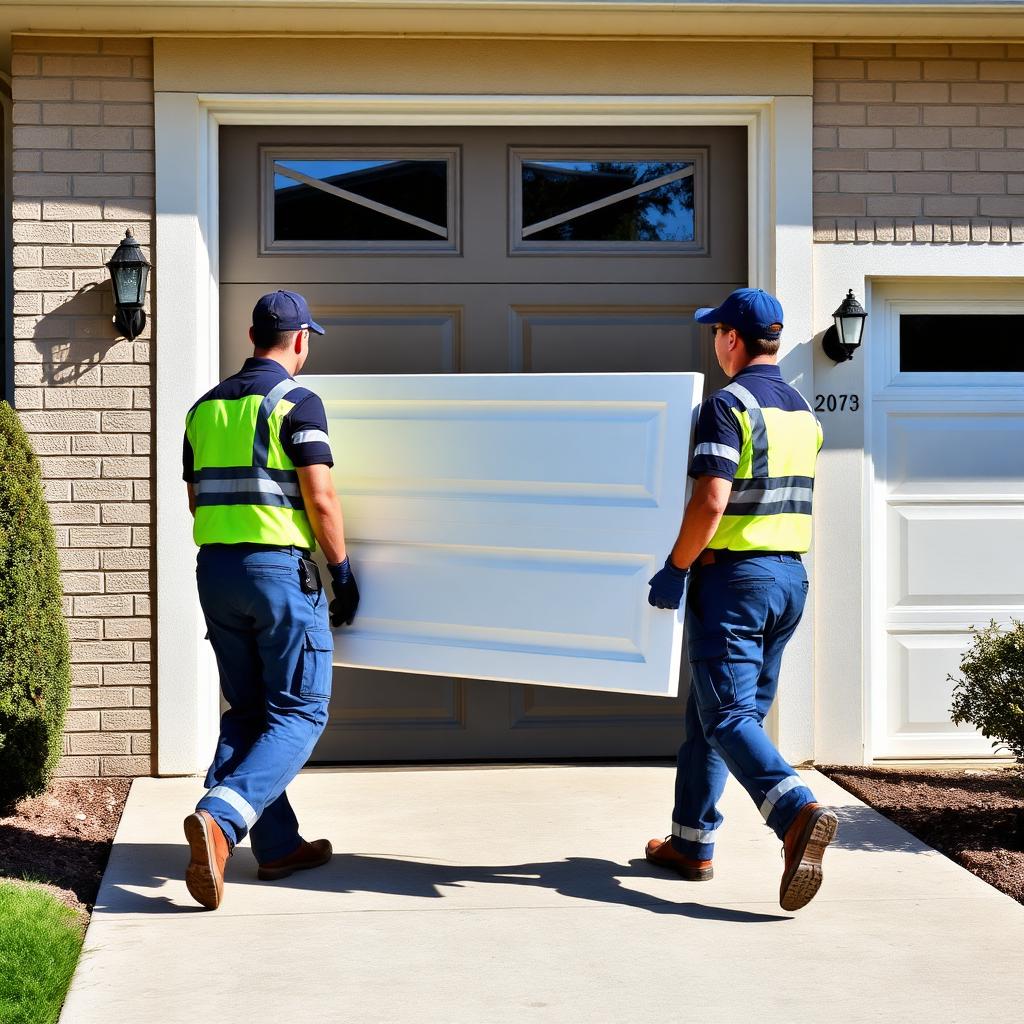
A garage door off its tracks is stuck, unsafe, and getting worse every time someone tries to force it. Here's exactly what to do — and just as importantly, what not to do.
First, don't touch the opener
If your garage door has come off track — meaning one or more rollers have popped out of the vertical or horizontal rails — the most important thing you can do in the first 60 seconds is not press the wall button and not press the remote. An opener trying to move an off-track door will bend the tracks further, snap the cables, damage the panels, and often break the arm connecting the opener to the door. What was going to be a two-hour repair turns into a full-day rebuild very quickly. Step away from any switch that controls the door.
Then, don't touch the door
The other instinct — grabbing the door and trying to muscle the roller back into the track — is almost as bad. An off-track door is unbalanced, sometimes badly. If a cable has snapped as part of the failure, the door is being held up by one cable and gravity, which is not a situation where you want your hands underneath it. Doors weigh 150 to 400 pounds. They fall fast. Every year, emergency rooms see the same handful of injuries from off-track DIY attempts.
Take a look — from a safe distance
Standing at least six feet back and to the side of the door, look at where the tracks are and where the rollers are. You're looking for a few things: which roller (or rollers) came out of the track, whether the track itself is visibly bent, whether the cables on either side are still intact and still taut, and whether the door is level or tilted. Take a couple of photos with your phone. This is useful information for the technician who'll fix it — often you can text the photos ahead of time and they'll arrive with the right parts.
The four most common causes
Off-track doors happen for a small number of reasons. A broken cable is the most common — when one cable snaps, the door drops on that side and often jumps the track. A shattered roller is next; old nylon rollers get brittle and blow apart, and the metal stem alone won't stay in the track. Impact damage from a car or bike bumping the door usually bends a track section, which then forces a roller out. Finally, an unbalanced door — springs on one side much weaker than the other — creates constant sideways stress that eventually pops a roller. Knowing which of these is happening on your door helps you understand whether a related repair is needed too.
What to do next: secure the space
If the door is stuck partway open, your home may be temporarily unsecured. Move valuables away from the immediate area, close any doors from the garage into the house, and if you can safely reach the emergency release cord without stepping under the door, pull it to disconnect the opener. This makes the situation slightly safer for the technician (they can control the door without fighting an opener that thinks it should be moving). If the door is stuck fully closed, you can leave it — just don't try to open it.
Call an emergency garage door service
Off-track calls are treated as urgent by most reputable garage door companies. Same-day service is standard, and if it happens in the evening, most offer emergency garage door repair with a real technician (not a dispatcher) on the line who can help you make the space safer while you wait. When you call, mention: what happened (bumped it with a car, heard a bang, don't know), whether you can see a broken cable, and whether the door is currently stuck open or closed. That helps them show up with the right parts on the first visit.
What a professional repair looks like
A technician will start by blocking the door in place with vise grips on the tracks, then release any remaining spring tension safely before touching the rollers. Bent track sections either get straightened with a track hammer or replaced entirely. Rollers get re-seated (or replaced if they're the cause). The cables and springs get inspected, because the same root cause that threw the door off track is often about to cause the next problem too. Finally, the door gets rebalanced and cycle-tested five to ten times to confirm smooth operation. Most off-track repairs take 90 minutes to two hours.
Cost expectations
The repair itself is usually mid-range — not a spring-replacement price, but not a full-panel-replacement price either. What runs up the bill is when other components failed as part of the incident (a cable that also needs replacing, a roller set that's shot, a panel that got dented). The technician will quote everything in writing before starting so you can decide what to do. If a panel is bent but structurally fine, you can often live with it for a while and replace it later.
How to prevent it from happening again
Twice-yearly maintenance catches most off-track precursors — worn rollers, frayed cables, weak springs, small bends in the track. Lubricating the rollers and hinges twice a year with a garage-door-specific spray extends component life significantly. And the biggest single prevention: don't hit the door with a car. It sounds obvious, but a slow bump at four miles per hour is enough to knock a track out of alignment. When it does happen — despite everyone's best efforts — our team is a phone call away.
Need Professional Garage Door Help?
Contact Garage Door Nest for a free quote on your next repair or installation.
Get a Free QuoteLooking for garage door repair in your area? Browse our full service directory by city.